Welding Jobs in Canada for Certified Welders & Fitter Welders
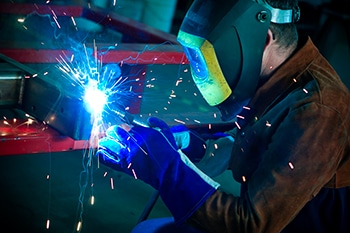 Welding jobs in Canada continue to grow across manufacturing, aerospace, automotive, structural steel, and automated production industries. Employers across Ontario, especially in the Greater Toronto Area, are actively hiring certified welders and fitter welders for full-time and contract roles.
At Winters Technical Staffing, we connect skilled trades professionals with employers in Toronto, Mississauga, Brampton, Vaughan, Markham, Ajax, and surrounding regions. Opportunities include MIG, TIG, SMAW, robotic welding, structural fabrication, and production-line welding environments.
Typical wages range from $22 to $45+ per hour, depending on certification, experience level, and industry specialization. CWB-certified welders and those with robotic automation experience command premium pay.
Candidates can apply directly, upload resumes, and access apprenticeship pathways through our recruitment team.
If you are searching for welding jobs near you in Ontario, our team works with employers actively hiring certified welding professionals.
Some of the major Canadian industries in which skilled welders can find success include:


Welder vs Fitter Welder: Understanding The Roles
Before exploring how to secure a job in these industries, it’s worth understanding the fundamentals of each role. To begin, it will be important to note that many people, employers and tradespeople alike often use the terms welder and welder fitter interchangeably; however, there are some subtle yet distinctive differences:
Welder:
- Performs final welds and material fusion
- Operates MIG, TIG, arc, and specialized welding systems
- Ensures structural integrity and quality compliance
Fitter Welder:
- Reads and interprets blueprints
- Measures, aligns, and prepares materials
- Tack components prior to final welding
Both roles require technical precision, safety compliance, and certification. Employers often prioritize candidates with documented welding certification and trade testing.
What Does a Welder Do?
- If you want to apply for a welder job, you should understand how to read and create blueprints and have the ability to calculate dimensions.
- You will be required to assess structures and materials for the quality of welds.
- As a qualified welder, you will be responsible for keeping your machines and welding equipment in excellent working condition.
- It helps to know how to use hand-held metal joining tools to join parts and fill seams, holes, and indentations.
- It is beneficial to know metallurgy, basic engineering, and specialized math concepts such as trigonometry.
To meet the various demands associated with welding jobs, interested candidates should possess the following:
- Good physical fitness
- Strong eye-hand coordination
- An ability to focus on repetitive tasks
- Respect for on-the-job safety practices
- Tolerance to work near/with heat and bright lights
- An understanding of working with hazardous materials
Also, there are different forms of welding, or areas of specialization within the trade, that are routinely associated with the use of certain types of materials/metals and/or linked to specific industries.
Welder Salary in Ontario
Welders in Ontario earn competitive wages depending on experience, certification, and industry specialization.
| Experience Level | Hourly Rate (CAD) |
| Entry-Level | $22–$26 |
| Experienced | $28–$35 |
| CWB Certified | $32–$42 |
| Robotic Welding | $35–$45+ |
Over time, shift premiums and unionized environments can significantly increase total annual earnings.
Welders working in aerospace, EV manufacturing, structural steel fabrication, and automated production facilities often earn above-average wages.
Welding Jobs that Involve Travelling
Most welding jobs require passing a test and placement, depending on your skill level. Here’s a list of careers that involve travelling:
- Industrial Shutdowns
You will have the opportunity to ensure manufacturing plants operate efficiently. - Ship Building & Repair
Welder jobs in shipyards often include working to build specialty research vessels, aircraft carriers, and more. - Military Support
Contracting companies look for trained and highly skilled welders who specialize in building infrastructure and repairing military equipment. - On-board Ship Repair & Maintenance
Welder jobs for a cruise line will require you to live on the ship to replace pipes and cater to repair and maintenance needs. - Pipeline Installation
You may have to travel to places where pipelines are being installed. The job would include repair and maintenance to prevent leaks and ensure safety. - Motorsports
NASCAR teams often have welding job opportunities, which involve travelling with the pit crew to construct and repair customized equipment. You will be required to help build cars through welding and metal fabrication.
Given the scope of opportunities within the trade and across the industrial sector, welding can be a viable and rewarding career path.
Competencies And Characteristics of Welders
Observation Skills
In welding, acute observation skills are crucial. Welders must keenly assess materials, blueprints, and project specifications. From identifying potential defects to ensuring precision in measurements, your observational prowess will be the key to producing high-quality welds that meet industry standards. Canadian employers highly value welders with a sharp eye for detail.
Manual Dexterity
Welding is an art that demands precision and finesse. The ability to manipulate welding tools and navigate intricate projects with ease is a hallmark of skilled welders. Welder jobs in Canada often require individuals with exceptional manual dexterity, as they play a vital role in ensuring the structural integrity and safety of various projects.
Time Management Skills
Meeting project deadlines is paramount in the fast-paced world of welding. Time management skills are highly valued by employers, and Canadian welding jobs are no exception. Efficiently allocating time for each phase of a project, from preparation to completion, is a hallmark of a reliable and sought-after welder in the Canadian job market.
Analytical And Problem-Solving Ability
Welding is not just about joining metals. It’s about overcoming challenges. Welders in Canada are often faced with unique problems that require analytical thinking and effective problem-solving. Your ability to troubleshoot issues on the spot and implement creative solutions will set you apart in the competitive landscape of welder jobs across the country.
Robotics & Automated Welding Careers in Ontario
Modern manufacturing facilities across the GTA increasingly rely on robotic and AI-assisted welding systems.
Employers are seeking welders with experience in:
- Robotic welding cells
- PLC-controlled production lines
- Automated MIG and TIG systems
- EV battery housing fabrication
- High-volume precision manufacturing
Welders who understand robotics integration and automated production environments are highly competitive in today’s hiring market.
Winters Technical Staffing works with advanced manufacturers investing in smart factory technology, offering opportunities in automation-driven environments.
Professional Staffing or Placement Agencies Can Help Launch a Welding Career
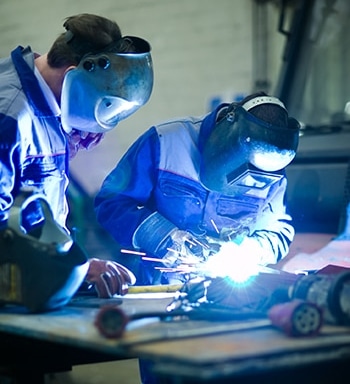 While all of the above may sound somewhat enticing, there remains one fundamental yet rather important matter for consideration: how does a potential candidate establish the foundation for a career as a welder? Even though the trade is in relatively high demand throughout the country, welding jobs are not handed out to all who might simply express an interest.
To prepare a sound base for their welding careers, interested parties should consider the following:
- Obtaining a high school diploma (emphasis on math and science), and
- Post-secondary studies at a community college or technical school, or
- Acquiring a registered apprenticeship through an appropriate employer (apprenticeships can also be attained via the post-secondary institution)
- Completing the associated certification exams per area of specialization
Welding Apprenticeship
Individuals seeking a welding apprenticeship, especially those who do not have access to such opportunities through the post-secondary route, may find it beneficial to align their efforts with a professional staffing/placement agency such as Winters Technical Staffing.
For over 40 years, Winters Technical Staffing has specialized in identifying and providing talent for the manufacturing sector, particularly the industries mentioned previously, for which welders can be in high demand.
By collaborating with the placement specialists from Winters Technical Staffing, welding candidates will have access to:
- Established working relationships with companies in many applicable industries
- Information on a range of potential apprenticeships/employment opportunities
- Job postings for employers in the local Toronto area as well as out-of-province
- Job opportunities that may best align with their specific area of interest or skill
- Employment options that may not otherwise be advertised to the general public
Welding Certification (Canada – CWB)
Certificate:
- CWB (Canadian Welding Bureau) Welder Qualification
What You Need To Get CWB Certified:
- Basic welding training (trade school or welding apprenticeship)
- Practical welding experience
- Pass a hands-on welding test (no written exam required in most cases)
- Test performed under CWB supervision
- Certification tied to:
- Specific welding process (MIG, TIG, SMAW, FCAW)
- Specific material (steel, stainless, aluminum)
- Specific position (flat, vertical, overhead)
*Important:
- Certification is employer-based (must work for a CWB-certified company).
- Welders must retest periodically to maintain validity.

Connecting Top Talent
With Great Companies
Find your ideal position today
Frequently Asked Questions About Welding Jobs
What Welding Jobs Pay the Most?
Most welder job opportunities pay well. Pipe, military, aerospace, underwater welders, and certified welding supervisors typically earn the most, alongside MIG and structural welders. You'll find strong pay in manufacturing, engineering, inspection, robotics, maintenance, construction, and fabrication. See current openings on our job listings page.
What are the Skills Needed to Land a Rewarding Welder Job?
Key skills include operation and control, assessment and monitoring, attention to detail, critical thinking, and reading comprehension. Physical strength, stamina, good vision, and manual dexterity round out a successful welding career.
Which Industries Commonly Employ Welders?
Infrastructure construction is the most common industry for welding jobs, but strong opportunities also exist in automotive, aerospace, and marine manufacturing.
How Can a Welder Advance Their Career?
Welders can advance by earning certifications and gaining experience in a specific welding discipline. Apprenticeship programs let you learn while earning, and most employers look for Canadian Welding Bureau (CWB) certification. Join our talent network to be matched with apprenticeship and advancement opportunities as they open.
What Industries Offer Long-Term Welder Careers?
Long-term welder careers are available in automotive production, aerospace engineering, structural steel fabrication, robotics manufacturing, EV facilities, shipbuilding, and infrastructure construction. Certified professionals often move into inspection or supervisory roles. Contact our recruitment team to discuss which path fits your experience.
Apply for Welding Jobs in Canada Today
If you’re ready to find welding jobs in Canada, Winters Technical Staffing connects certified welders and fitter welders with employers across Toronto and the GTA hiring for MIG, TIG, SMAW, robotic, and structural welding roles. Visit our website to learn more about our process, or contact us today at 1-877-495-7422 to discuss current openings, apprenticeship opportunities, and certification requirements.